


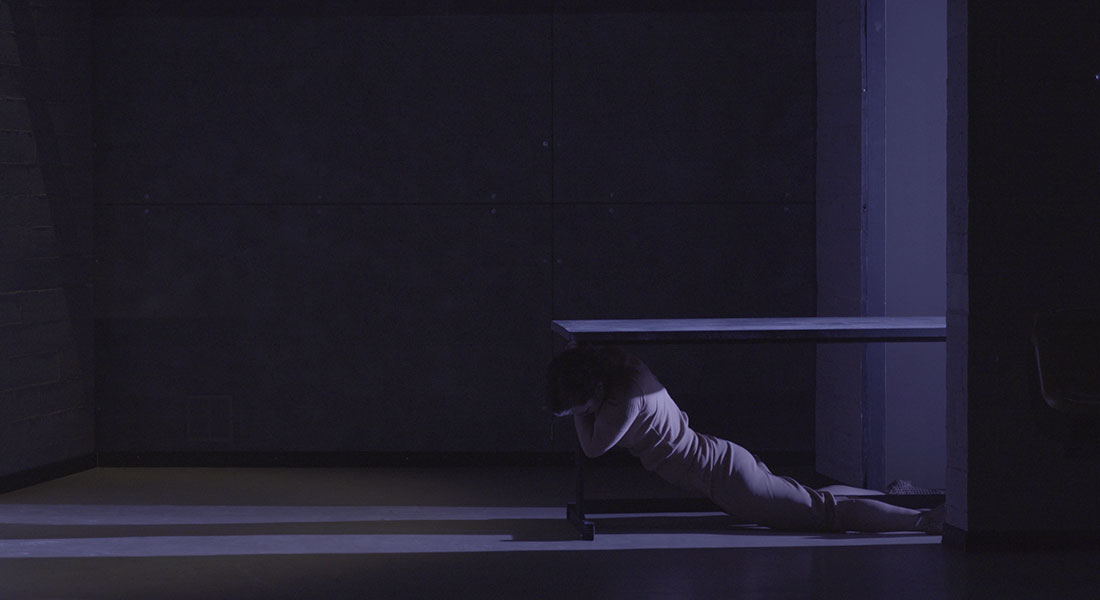
EL ABISMO DE LOS PÁJAROS
//2019
“The only destiny of time is to burn in a fire.”
Carlos S. Bouma
The musical work Quartet for the End of Time, composed by Olivier Messiaen while in the Görlitz prisoner-of-war camp during World War II, serves as an inspirational starting point to condense the most extreme corners of the human mind. On one hand, humans are capable of subjugating, humiliating, imprisoning, and violently killing members of their own species; on the other, they can create a timeless masterpiece within the very limits of such repression.
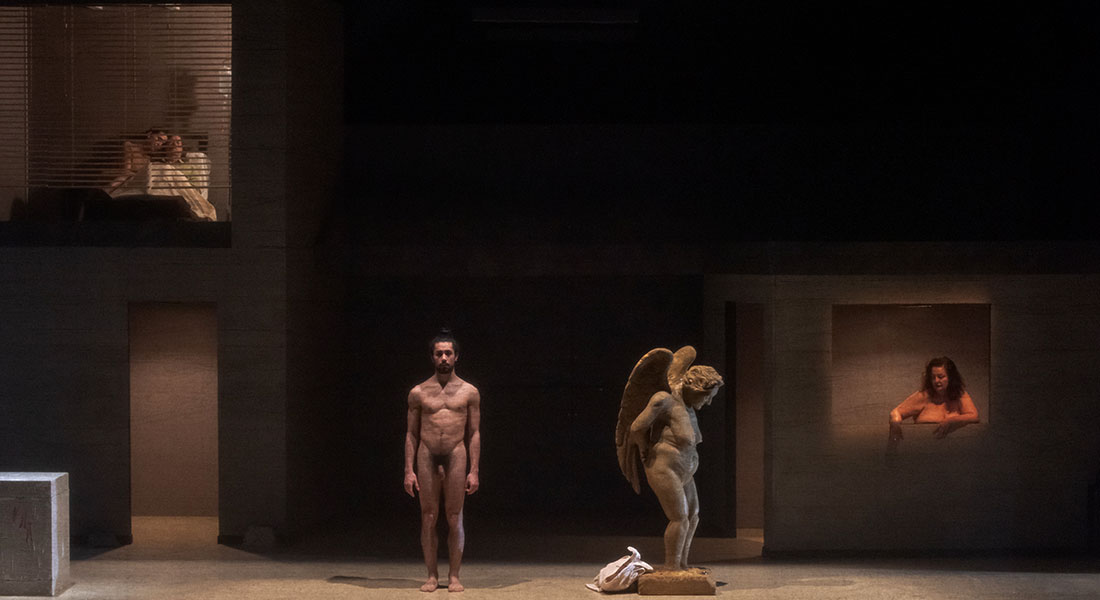
The work is situated in a gray, bare, empty, and cold space, devoid of intimacy, where the beauty that emerges from the quicksands of existence gains greater significance. This space acts as a container for visceral maps, illusions, desires, and impositions, while also serving as an allegory of time, as Messiaen defined in the third movement of the quartet:
“The abyss is time. With its sadness, with its fatigue. Birds are the opposite of time; they are our desire for light.”
From this metaphorical sphere begins an abstract journey, portraying the human mind from the innocent beginnings of individuality to its later, impure expression in community, until the conclusion of all actions and thoughts.
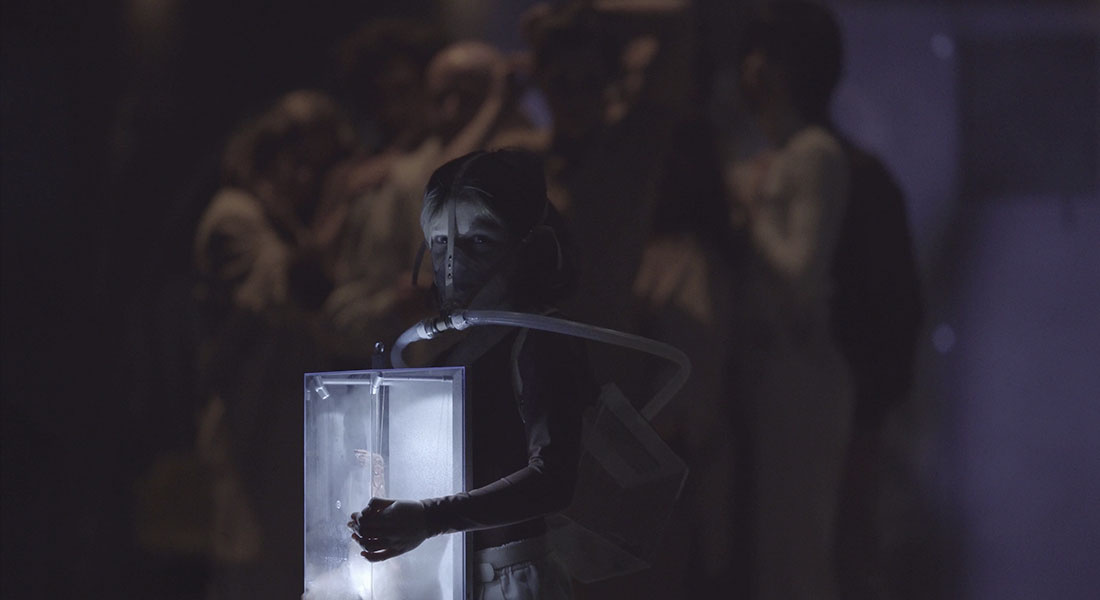
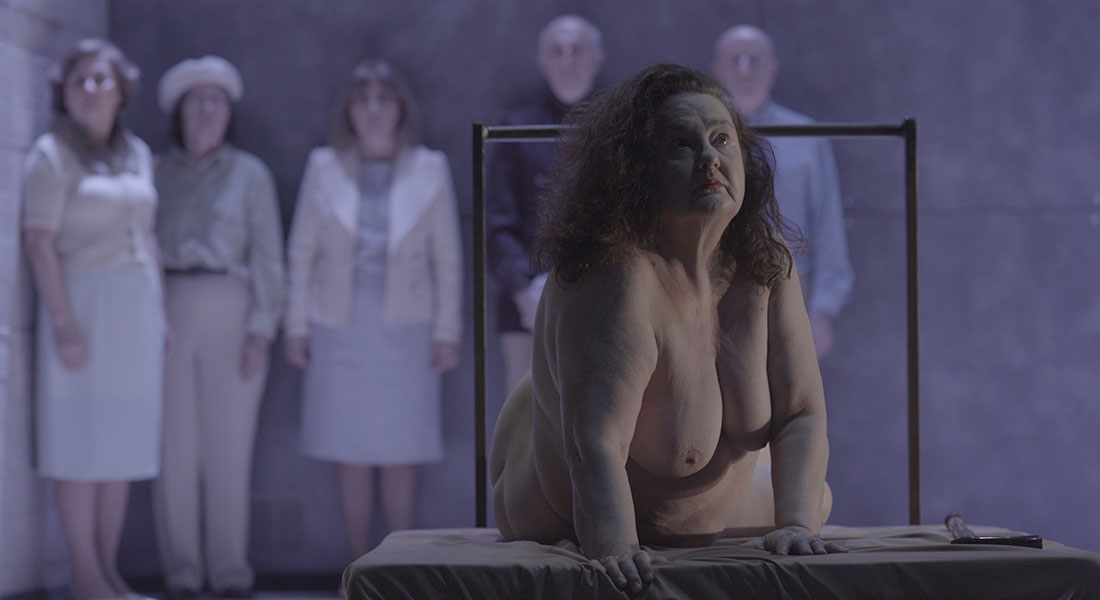
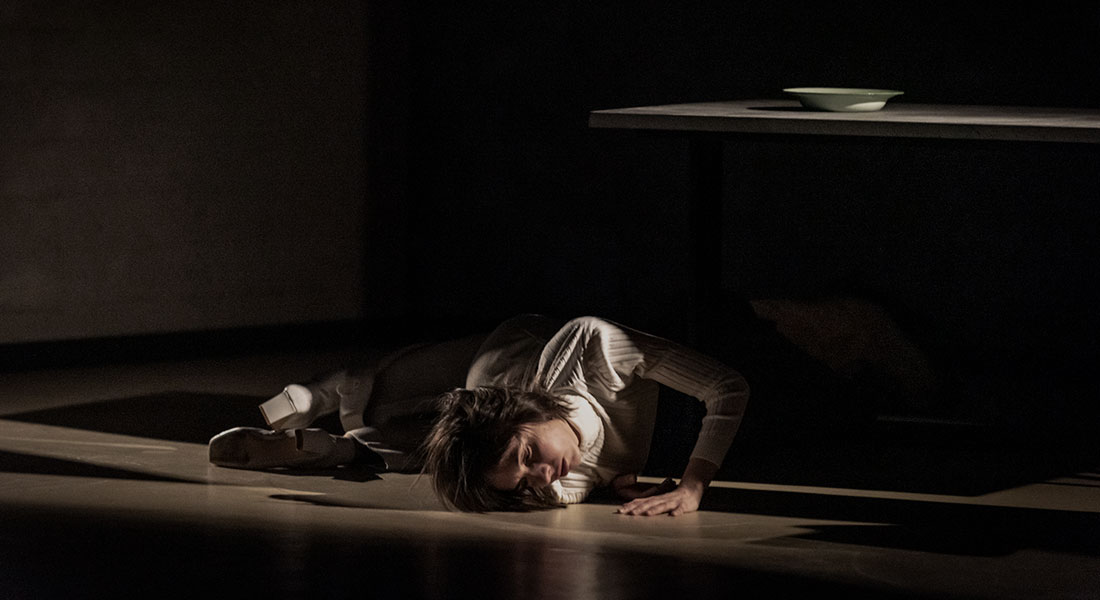
Throughout this journey, the space hosts fragile, disoriented bodies—bodies in waiting, observing disordered landscapes and open, unfinished scenes—evoking sensations of suffocation and atrophy that individuals may experience, both physically and mentally, when deprived of freedom, whether in a confined physical space or navigating a tangle of social and/or moral rules.
During the creative process, numerous universal and vital questions arise to guide the development of the work: How do we manage our own existence? How do we relate to others? What do we leave as a legacy? Which remnants of our primal essence do we carry? What role does instinct play? Does it respond to anything or anyone? What illuminates us?
We have never aimed to answer all these questions. However, to date, we believe we have given them a place—a framework where, from an aseptic perspective and without a traditional narrative, the interplay of body and word, sound and corporeality, allows for a free exercise of interpretation. This approach accommodates, without exception, the conditions and characteristics that shape our existence.
The stage features a cast of 11 performers, diverse in age—from 7 to 74 years old—and thus in life experience, professional expertise, and artistic language. This diversity has become raw gold for the creation of this stage piece. It is a clear and deliberate commitment to embrace authenticity and diversity, to find truth in the gaze, in bodily expression, in movement… and to get lost in the interior of each person inhabiting this vast tableau vivant.
ARTISTIC TEAM
Direction: Tagore González
Set design: Isis de Coura
Dramaturgy: Carlos S. Bouma and Tagore González
Texts: Carlos S. Bouma
Light design: Lola Barroso
Costume design: Isis de Coura and Andrea Busmar
Cast: Teresa Altés, Juana Andueza, Julia Bisquert, Mercedes Calleja, Celia Díaz, Xoel Fernández, Ricardo Lacámara, Natalia López, Silvia Maya, Enrique Moya, Gonzalo Peguero.
Direction assistant: Coral Bedregal
Rehearsals assistants: Inés Mora and Mario Hernández
Original music: José Luis López (Builtthenburnt)
Voice over: Cachito Noguera
Sound assistant: Alfredo Picazo
Set construction: Nardi Artesano
Sculpture: Alberto Ruiz de Mendoza M.
Video recording: Alonso Valbuena y Marcos Vilariño
Still photography: Pepe H